How to Select the Best Underground Mining Vehicle for Your Mine?
Selecting the right underground mining vehicle isn’t just about horsepower or payload — it’s about safety, adaptability, and efficiency deep beneath the surface. The best vehicle for your mine depends on how well it matches your operation’s terrain, capacity needs, energy limits, and support resources. Let’s break it down.
Understanding the Role of Underground Mining Vehicles
Importance of Specialized Equipment in Underground Mining
Underground mining vehicles are not standard construction equipment. They are built to work in narrow spaces, steep ramps, and low-ventilation areas common in underground operations. These machines handle key jobs like ore hauling, material transport, drilling support, and worker movement. The right choice can boost productivity a lot.
Choosing a machine with features suited to underground conditions raises efficiency and worker safety. A poor fit might halt production because of limited turning ability or frequent repairs.
Common Types of Underground Mining Vehicles
There are several kinds of underground mining vehicles. Each has its own role:
-
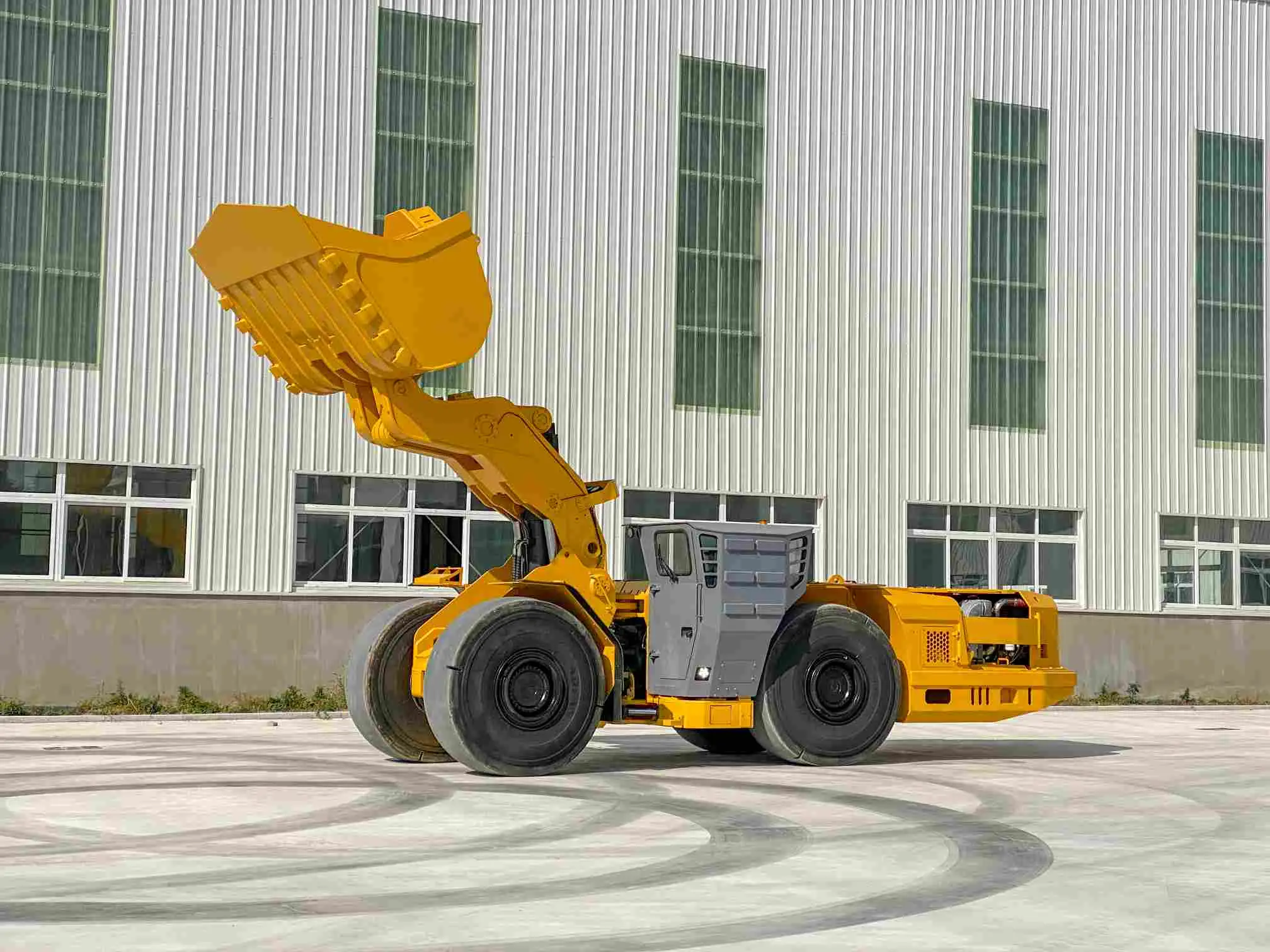
Load-Haul-Dump (LHD) machines: Built for material loading and short-distance hauling.
-
Underground trucks: Used mainly to carry ore from stopes to processing points.
-
Utility vehicles: Multi-purpose machines for personnel transport, maintenance, or tool delivery.
The DALI WJ-6 LHD, for example, has a 6m3 bucket with 14-ton payload. It features a sturdy boom structure with two lifting cylinders and SAHR braking system for extra safety.
Key Factors to Consider When Choosing a Vehicle
Terrain and Mining Conditions
Every underground mine differs. Check the width and height of tunnels. Some operations have just 2.5 m x 2.5 m clearances. This calls for small vehicles.
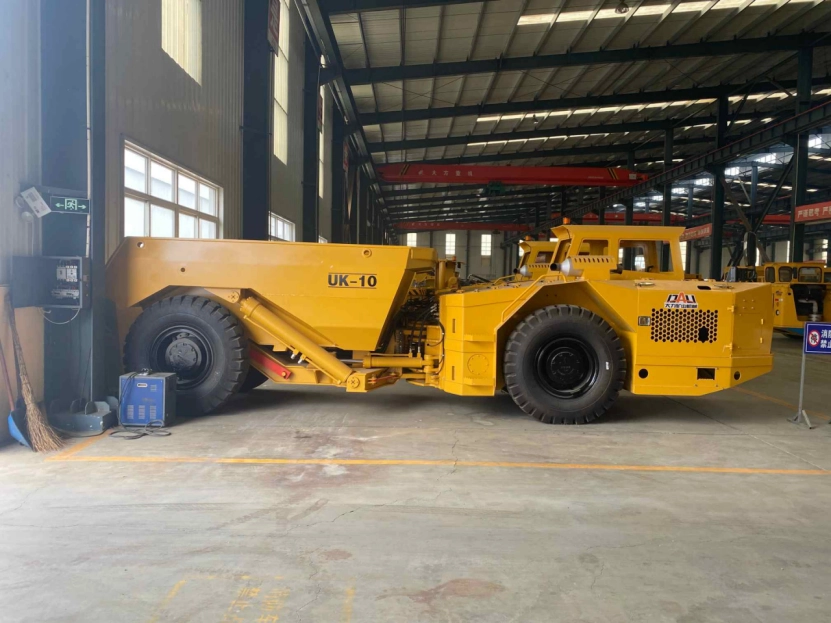
The DALI UK-10 is a slim 10 ton truck. It fits in a 2.5 m x 2.5 m heading. So, it suits small mines or tight tunnel projects well. Ground moisture levels and stability also matter. They affect tire grip and vehicle life.
Vehicle Capacity and Maneuverability
Payload is important. Overloading shortens lifespan and efficiency. Underloading slows output. Matching the tramming capacity with production output is vital.
Here’s a quick look at two different DALI models:
| Model | Payload | Turning Radius | Dimensions (L×W×H) |
| UK-10 Dumper | 10 Ton | 4700 / 7400 mm | 7920×1920×2180 mm |
| WJ-6 LHD | 14 Ton | Articulated 42° | 10598×2768×2580 mm |
If your operation has tight corners and small tunnels, the UK-10 could be better. For bigger haul needs in wider tunnels, the WJ-6 provides more volume.
Power Source: Diesel vs Electric vs Hybrid
Diesel engines remain common. They offer strong power density and easy refueling.
The DALI UK-10 runs on a DEUTZ F6L914 diesel engine. It produces 84 kW at 2300 rpm with EU II and US T2 emission norms. Diesel units add heat and fumes. So, good ventilation is essential.
Electric options cut emissions and cooling needs. But charging setup can be tough underground. Hybrid models are growing in use. They offer fewer emissions than diesel and less setup than full electric.
Safety Features and Regulatory Compliance
Safety is crucial underground — it’s the top priority. Look for vehicles with:
-
ROPS/FOPS-certified operator cabins
-
Fire suppression systems
-
Visibility aids like cameras
The UK-10 has a ROPS/FOPS certified canopy. It can add an engine fire suppression system (ANSUL or PROTECFIRE) and rear camera system. Also, make sure machines meet local mining safety rules like GB21500 or JB/T8436 standards.
Maintenance Requirements and After-Sales Support
Downtime costs a lot. Pick models with easy-to-reach service points and tough components.
The UK-10 uses DANA Spicer transmission, METRITOR axles, and PERMCO hydraulic pumps — all well-known parts in the field.
Check if the supplier offers operator training, spare parts delivery, and English-language manuals too.
Comparing Vehicle Models Based on Operational Needs
Performance Metrics to Evaluate Across Models
Check travel speed on different grades, torque output, and cycle times.
The DALI UK-10’s first gear hits up to 4.8 km/h on flat ground. At a 25% grade, it still does 2.7 km/h. Dumping time affects cycle productivity. The UK-10 finishes discharging in less than 6.8 seconds.
Durability and Build Quality Across Brands
Frame strength counts when facing constant vibration. Welded steel frames with smart thicknesses last longer.
The WJ-6’s frame uses high strength welded steel structure with optimized material thicknesses. Think about corrosion resistance and bucket material as well. DALI uses Hardox 500 for better wear life.
Cost Considerations in Vehicle Selection
Initial Investment vs Long-Term Operating Costs
Don’t focus only on the upfront price. Include:
-
Fuel consumption
-
Component replacement intervals
-
Labor costs for maintenance
The WJ-6 LHD has a fuel consumption rate of about 350 g/kWh. Over time, that builds up.
Financing Options and Return on Investment (ROI) Potential
If your mine lasts just 3–5 years, leasing may fit better than buying. Calculate ROI from less downtime, better tramming cycle efficiency, or lower labor costs due to simpler handling.
Customization Options for Specific Mine Needs
Tailoring Vehicle Features to Your Operation
Not all mines match — vehicles shouldn’t either.
DALI vehicles can add optional features. These include remote control systems, auto lubrication systems, enclosed ROPS/FOPS cabs with A/C, or tire pressure detectors.
Suspension choices or dust suppression systems can help too. It depends on your site’s conditions.
Working With Suppliers to Make an Informed Decision
Evaluating Manufacturer Support Services
A solid supplier offers more than just sales. DALI provides operation manuals, service manuals, and parts manuals in English. This eases setup for global teams. Ask about service intervals, response times for field problems, operator training programs, and access to spare parts warehouses.
Importance of Field Testing Before Final Purchase
Real-world testing beats everything else. Before you buy:
-
Run the vehicle in your tunnel system.
-
Measure actual fuel use against the spec sheet.
-
Check driver comfort over several shifts.
Field trials reveal issues specs miss. Like how steering works on wet slopes or how easy it is for operators to get in and out while in full PPE.
FAQs
Q: What’s the difference between LHDs and underground trucks?
LHDs load material and haul it short distances. Trucks mainly transport ore over longer underground routes.
Q: How important is ventilation when using diesel vehicles underground?
Very important. Diesel exhaust needs strong ventilation systems to handle heat and emissions safely.
Q: Can I customize a mining vehicle for narrow tunnels?
Yes. Many vehicles like DALI’s UK-10 are made for tight spaces such as 2.5m x 2.5m headings.
Q: Do electric underground vehicles require special infrastructure?
Yes. Charging stations and cooling systems are needed. They may not fit every mine layout or budget.
Q: What safety standards should my mining vehicle comply with?
Look for compliance with standards such as GB/T 35195-2017 or GB21500 for underground tire-type trucks.
About Us
Qixia Dali Mining Machinery Co., Ltd was established in 1998, located in Yantai City.
The company is mainly engaged in the design, development, production, installation and training of underground mine equipment and ore processing equipment, spare parts supply and sales.
More


Contact Us
- Xinbang Rd, Private Economy Park, Qixia, Shandong Province, China
- +86 173 5350 8179
- ytdali@ytdali.com
 +86 13553073459
+86 13553073459
+86 13553073459


